
Our Services
Pre-Engineered Buildings
What are Pre-Engineered Buildings?
Pre-Engineered Buildings (PEBs) are advanced steel structures that are designed, manufactured, and prefabricated in a controlled facility before being assembled on-site. Known for their speed, strength, and cost efficiency, pre engineered buildings India have become the preferred choice for industrial, commercial, and infrastructure projects.
As a trusted PEB building manufacturer India, Vishal Colour Roofs Limited delivers high-quality, customized steel building solutions for warehouses, factories, logistics parks, commercial complexes, and manufacturing units. Recognized among leading PEB Companies in India and reliable pre engineered buildings companies in India, we provide durable structures engineered to meet diverse project requirements. We also cater to businesses seeking dependable PEB companies in Delhi NCR and experienced PEB manufacturers in Noida.
Key Features of PEB Buildings
- Faster construction with prefabricated components
- Cost-effective design and optimized material usage
- High structural strength and long-lasting durability
- Flexible layouts with easy future expansion
- Low maintenance and corrosion-resistant construction
- Eco-friendly and sustainable building solution
- Custom-engineered designs for various industries
With advanced engineering, premium materials, and precision manufacturing, Vishal Colour Roofs Limited delivers innovative PEB solutions that combine quality, performance, and long-term value, making us a preferred partner for modern steel building projects across India.

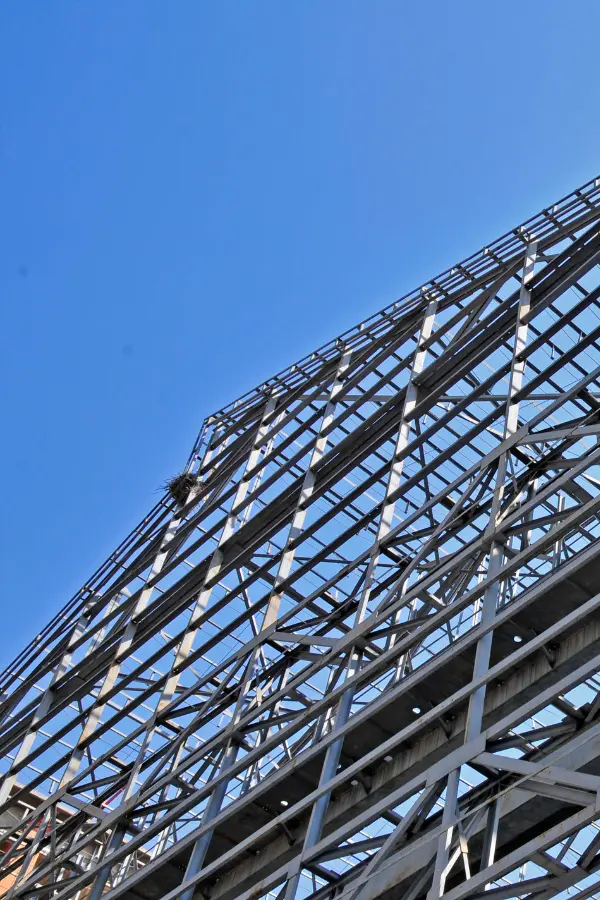
ADVANTAGES OF PRE-ENGINEERED STRUCTURES
At Vishal colour roofs Limited, our engineered building solutions combine design precision with construction efficiency. These structures are ideal for industrial, commercial, and institutional needs, offering long-term durability and cost-effectiveness.
Faster Construction
Buildings are completed in 4 to 8 weeks, reducing project time by 30%.
Cost Savings
Computerized design and manufacturing reduce costs in design, manufacturing, and erection.
Easy Expansion
Future expansions are simple by adding bays or pre-designing for height and width.
Clear Spans
Pre-engineered buildings allow up to 90m of clear span, offering column-free space.
Quality Assurance
Manufactured in controlled environments, ensuring consistent quality and reduced on-site labor.
BUILT-UP MANUFACTURING PROCESS FLOW – VISHAL COLOUR ROOFS PVT. LTD.
Raw Material Receiving (HR Plate)
Material Inspection / MTC Verification
Plate Cutting (Oxy/ Plasma/ Shear)
Edge Preparation & Marking
Web-Flange Assembly & Tack Welding
Submerged Arc Welding (PTW Line)
Weld Visual Inspection (WVT)
NDT Testing – Dye Penetrant Test (DP Test)
Fit-up & Connections Assembly
Final Fit-up Inspection
Connections Welding (MIG welding)
Grinding
Shot Blasting (if required)
Surface Cleaning Check (SA 2.5)
Finishing / Drilling
Primer / Paint Application
DFT / Coating Thickness Inspection
Final Inspection
Dispatch
Raw Material Receiving (HR Plate):
HR plates are received in the plant as per the material requirement plan. Each plate is visually inspected for damage, rust, or deformation during unloading. Plates are stored on timber saddles to prevent surface scratches. The incoming material is verified against the purchase order and material list. Any deviation in size or grade is reported to quality control. Handling is done by using cranes to avoid bending. The plates are stacked area-wise based on thickness. Identification tags for each job are maintained for traceability. Proper inventory records are updated in the log register.
Material Inspection / MTC Verification:
Before processing, the quality department verifies the Mill Test Certificates (MTC) from the supplier. The chemical and mechanical properties are checked against IS 2062 standards. Visual inspection ensures that no rust or scaling is present. Random plate thickness is cross-verified using micrometers. If defects are found, the material is segregated and marked as ‘Hold’. Once cleared, plates are released for cutting. Traceability is maintained by marking the heat number on each plate. This ensures that only approved materials proceed further. The inspection status is recorded in the incoming inspection report. Proper QC documentation is retained for reference.
Plate Cutting (Oxy/Plasma/Shear):
Plates are cut according to the cutting plan derived from fabrication drawings. Oxy-fuel or plasma cutting machines are use based on plate thickness. Operators ensure proper gas pressure and nozzle cleanliness for uniform cuts. Edges are checked for straightness and smoothness after cutting. Templates or CNC-controlled patterns are used for accurate cutting. The identification mark of each piece is retained. Slag or dross is removed after cutting. Cut plates are stacked on wooden pallets to avoid damage. Production logs record the number of plates cut.
Edge Preparation & Marking:
The edges are prepared by beveling or grinding according to the joint configuration. Bevel angles are made as per welding procedure specifications. Marking lines are drawn using chalk for flange, web, and stiffener alignment. Templates or measuring tapes ensure dimensional accuracy. Proper marking prevents misalignment in the assembly stage. Operators follow approved fabrication drawings for layout. The surfaces are cleaned to remove oil, rust, or debris. After marking, each plate is identified with part numbers. The QC inspector verifies layout dimensions. Once approved, the plates move to assembly for tack welding.
Web-Flange Assembly & Tack Welding:
The web and flange plates are positioned on assembly fixtures. Hydraulic jigs and clamps are used to ensure proper alignment. Tack welding is carried out to temporarily hold the plates together. Welding sequence is maintained to avoid distortion. Dimensional checks are done for flange width and web height. Tack weld quality is inspected before final welding. Any misalignment is corrected at this stage. The assembly is marked with identification numbers. Once inspection clearance is given, the beam proceeds to the SAW line. Proper handling is maintained to prevent distortion during transfer.
Submerged Arc Welding (PTW MACHINE):
Submerged arc welding joins the web and flange plates permanently. The SAW machine ensures deep penetration and uniform weld quality. The flux is fed automatically to protect the weld pool. The operator monitors welding current and travel speed. The weld seam is continuous with minimal spatter. Post welding, slag is removed using chipping tools. Welds are allowed to cool naturally to minimize stress. Each beam is visually examined for straightness. Beams are shifted to the inspection area using EOT cranes. The welding log is maintained for traceability.
NDT Testing – Dye Penetrant Test (DP Test) :
The DP test is performed to identify surface cracks or discontinuities. A red dye is applied over the cleaned weld surface. After penetration time, excess dye is wiped and a developer is sprayed. Cracks appear as red indications on the white background. The QC inspector interprets the results based on standard acceptance criteria. All findings are logged in the NDT report. Defective areas are marked and repaired by grinding and re-welding. Repaired areas are retested to confirm soundness. Once satisfactory, beams are cleared for further processing. DP testing ensures weld integrity and surface quality.
Fit-up & Connections Assembly:
After welding, the beams are moved to the connection assembly area. Stiffeners, base plates, and connection plates are positioned as per the fabrication drawing. Alignment is checked using levels and measuring tapes. Components are tack welded before final joining. The assembly ensures proper connection geometry for site erection. Dimensional checks confirm bolt hole positions. Each connection piece is identified with part numbers. Beams are inspected for accuracy before welding. The assembly stage ensures readiness for final fit-up inspection.
Final Fit-up Inspection :
The QA team conducts a detailed inspection of the assembled connections. This inspection ensures correct alignment, bolt hole dimensions, and component fitment. The weld joints are visually examined for accessibility and cleanliness. The inspector confirms that all dimensions match the approved drawings. Any deviations are recorded in the inspection sheet. Rework is carried out immediately if required. Acceptance marks are applied to cleared sections. This inspection ensures the assembly is structurally sound and ready for final welding. Proper documentation is maintained. Only after approval can the beam proceed to MIG welding.
Connections Welding (MIG welding):
MIG welding is used for connection plates, stiffeners, and minor joints. The process provides clean and precise welds with good aesthetics. The welder ensures correct voltage and wire feed speed for consistency. Joints are welded as per the specified welding sequence. Post welding, spatter is cleaned using brushes. Weld appearance and quality are visually verified. Any defects are repaired immediately. The connections are allowed to cool before further processing. MIG welding ensures high-quality connections for structural performance. Welding activities are documented in the production records.
Grinding:
All welded surfaces and edges undergo grinding to remove burrs and sharp edges. Smooth grinding enhances the surface finish and safety during handling. The operator uses handheld grinders with proper PPE. Weld spatter and slag residues are removed. Grinding ensures a clean surface for painting and assembly. The quality inspector verifies the smoothness and flatness. Beams are blown with compressed air to remove dust. Ground areas are marked as cleared. The process is recorded in the finishing log. This stage prepares the surface for shot blasting.
Shot Blasting (if required):
Shot blasting removes rust, mill scale, and welding residues from beam surfaces. Shots are ropelled under high pressure for surface cleaning. The process achieves a uniform metallic finish. It enhances coating adhesion during painting. The operator ensures proper blasting distance and coverage. Dust extraction units maintain clean air conditions. After blasting, the surface is inspected for uniformity. Beams not meeting standards are re-blasted. Cleaned beams are immediately sent for painting to prevent oxidation. Shot blasting is essential for achieving Sa 2.5 surface quality.
Surface Cleaning Check (SA 2.5) ✅:
After shot blasting, the surface cleanliness is visually inspected. Inspectors ensure that the steel surface is free from rust, oil, and mill scale. The cleanliness level is compared with Sa 2.5 standard reference plates. Any deviation requires re-blasting. Surface roughness is measured using surface comparator gauges. The inspection ensures optimal paint adhesion. Results are documented in surface inspection records. This check is mandatory before primer application. Proper lighting and clean conditions are ensured during this inspection.
Finishing / Drilling:
After cleaning, finishing operations are carried out. Bolt holes on web and flange are drilled using magnetic or radial drills. Hole positions are verified using templates. Burrs around holes are removed by deburring tools. The components are cleaned and checked dimensionally. Finishing ensures beams are ready for site erection. Any misalignment or ovality is corrected. Clean and finished beams proceed for painting. All records are updated in the production report.
Primer / Paint Application:
An anti-corrosive primer or paint is applied on the surface. Painting is done using spray or brush methods as per specification. The beam surface is wiped clean before painting. Uniform and streak-free coating is ensured. Paint is mixed properly before application. Multiple coats are applied if required. Painted surfaces are allowed to dry. Paint finish is inspected visually for uniformity. Proper identification and color codes are applied. Painted beams are moved to the curing area.
DFT / Coating Thickness Inspection ✅:
After painting, the dry film thickness (DFT) of the coating is measured. DFT gauges are used at random points across the surface. The reading is compared to the specified paint system requirements. QC ensures proper coverage and thickness uniformity. Thin or over-applied areas are touched up. Each beam’s DFT record is logged in the coating report. Visual inspection ensures no pinholes or runs. Approved beams receive a QC pass stamp. This stage guarantees protective coating performance. Paint quality ensures long-term durability.
Final Inspection ✅:
The final inspection covers dimensional, weld, and coating verification. Inspectors ensure all processes have been completed as per drawing. Beams are checked for identification markings. Any remaining defects are corrected immediately. All inspection reports are reviewed for completeness. Final QC approval is granted before dispatch. Documentation is attached to the batch file. This inspection confirms compliance with project specifications. After approval, beams are released to the dispatch area.
Dispatch:
Finished beams are loaded on trailers for delivery. Wooden blocking and steel strapping are used to secure the load. EOT cranes and hydra machines are employed for handling. The dispatch team ensures safe loading and proper weight distribution. Documentation such as inspection reports and delivery challans accompany the load. The transport vehicle is visually inspected before departure. The driver is briefed on delivery instructions. Material movement is recorded in the dispatch log. This marks the completion of the built-up manufacturing process.
