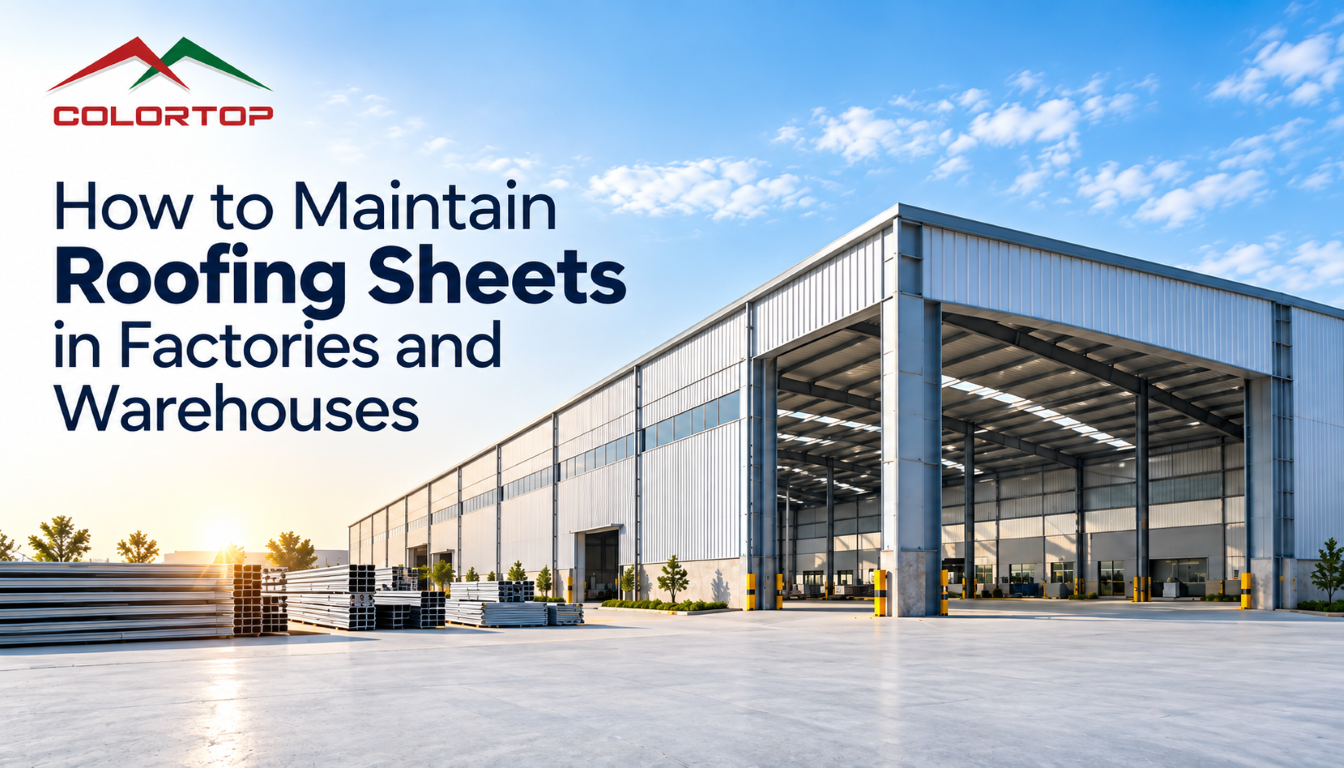
When people plan a factory or warehouse, the roof usually gets most of the attention. But the walls also represent a major part of the building envelope, take the same weather, and decide how the building looks and how well it keeps heat, dust and rain out. For steel buildings, the usual answer is wall cladding sheets: profiled metal sheets fixed over a steel frame to form the outer skin of the building.
This guide explains what wall cladding sheets are, the main types, and what to check before you order, so you can specify the right product for your project.
What Are Wall Cladding Sheets?
Wall cladding sheets are roll-formed steel sheets, usually galvanized, galvalume or pre-painted (colour coated), that are fixed to horizontal girts on a steel structure. They do not carry the building’s load. The frame does that. The sheets protect the structure and give the building a finished, uniform look.
They are used on pre-engineered buildings (PEB), warehouses, factories, cold storage units, workshops, showrooms, farmhouses and commercial buildings. Compared with brick or concrete walls, they are lighter and quicker to install, and they put less load on the foundation. You can see the range we manufacture on our wall sheets page.
Main Types of Wall Cladding Sheets
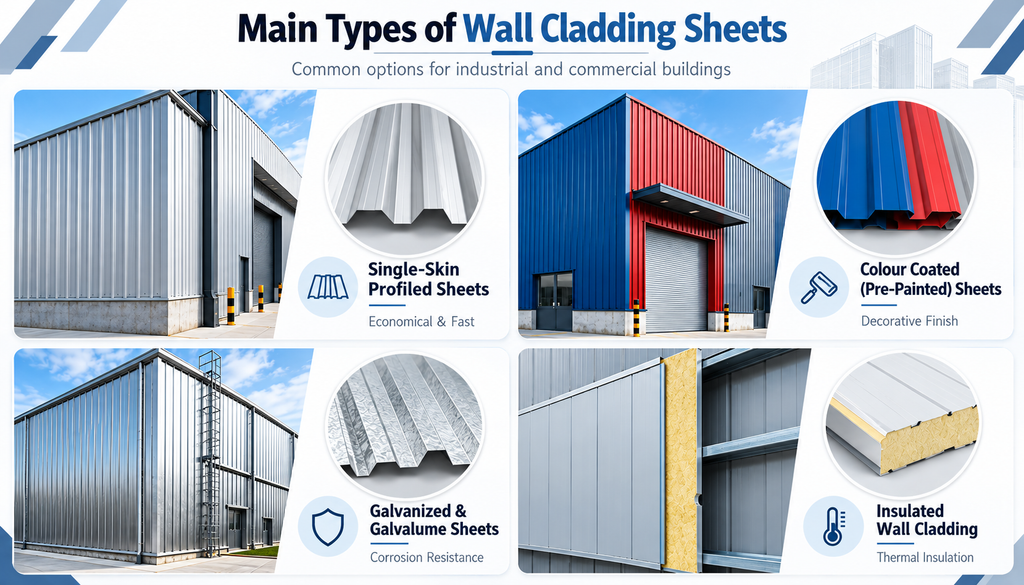
1. Single-skin profiled sheets
The most common option. A single sheet of ribbed or trapezoidal profile is fixed directly to the wall girts. It is economical, light and fast to fit, which makes it the usual choice for general-purpose sheds, storage buildings and workshops.
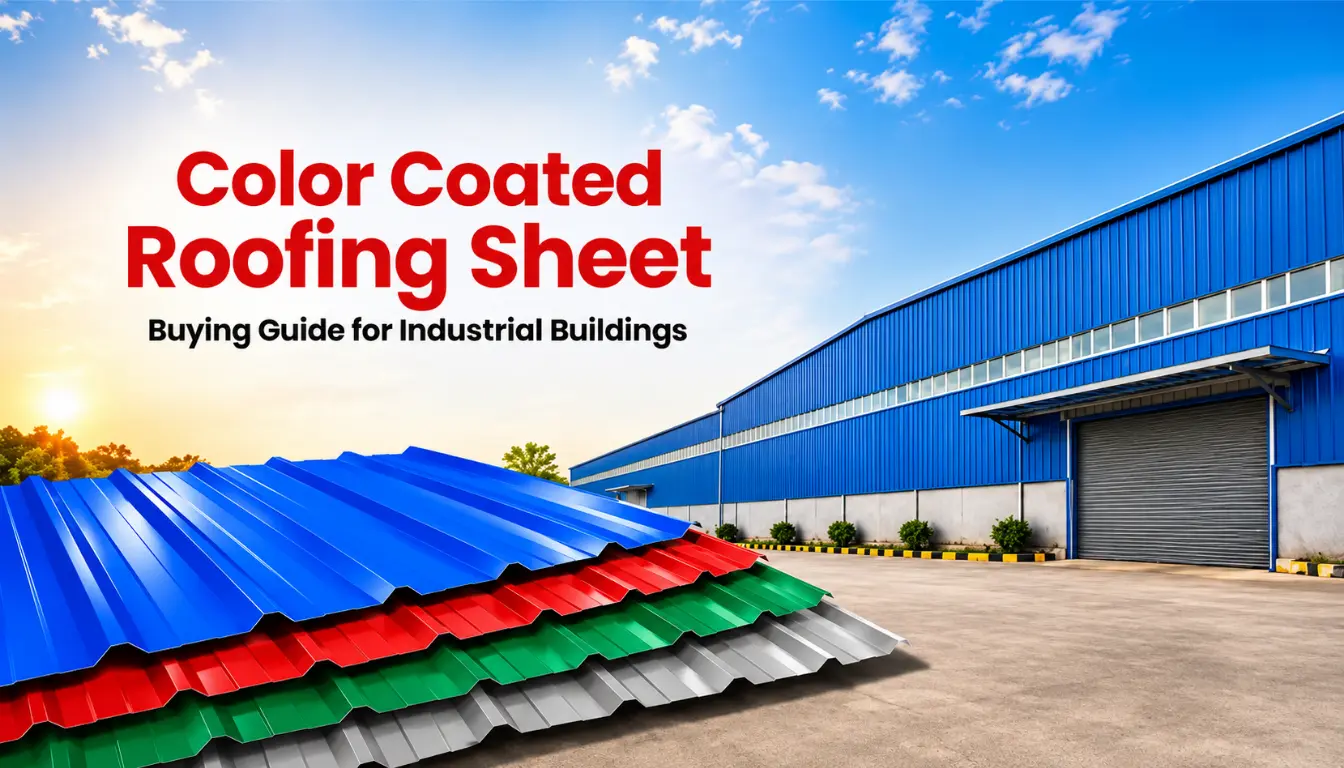
2. Colour coated (pre-painted) sheets
These are made from pre-painted coil, so the colour is applied in the coating line before the sheet is formed. They suit buildings where appearance or brand colours matter, such as showrooms, offices attached to factories and logistics parks. Our guide to colour-coated roofing sheets explains coating systems in more detail, and the same principles apply to wall sheets.
3. Galvanized and galvalume sheets
Galvanized sheets have a zinc coating. Galvalume uses an aluminium-zinc alloy coating and can offer strong corrosion resistance in many environments, while suitability depends on exposure conditions and coating specification. Either can be left unpainted for utility buildings or painted later.
4. Insulated wall cladding
For cold storage, food processing, pharma or any space where indoor temperature must be controlled, the sheet is combined with an insulation layer, such as a sandwich panel, or a liner sheet with insulation between the two layers. This cuts heat transfer and helps with sound reduction.
Key Benefits
- Faster construction. Sheets are cut to length in the factory and fixed on site with screws, so installation can be significantly faster than conventional masonry walls.
- Light weight. Lower dead load on the structure and foundation than masonry.
- Weather protection. Properly specified coated steel can provide effective protection against rain, wind, UV exposure and temperature variation.
- Low maintenance. Factory-coated steel can reduce routine finishing and repainting requirements compared with conventional plastered surfaces, depending on exposure and maintenance.
- Design flexibility. Multiple colours, profiles and lengths are available, and compatible translucent panels can also be integrated for daylight where required.
- Easy modification. Sheets can be replaced or the building extended by adding bays.
How to Choose the Right Wall Cladding Sheet
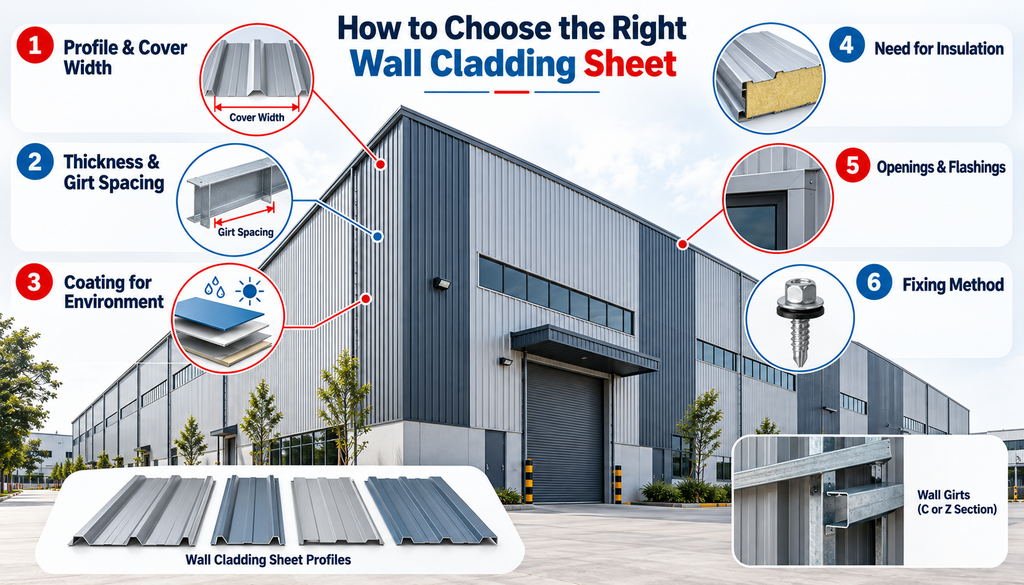
Check the profile and sheet cover width
Profile depth affects stiffness and appearance. Deeper or more efficiently designed profiles can provide greater stiffness, but allowable spacing still depends on the complete sheet specification. Confirm the effective cover width, because that decides how many sheets and how much overlap your wall needs.
Match thickness to the girt spacing and wind load
Wall cladding is available in different thicknesses, and the right specification depends on girt spacing, wind load, building height, profile and steel grade. Ask your supplier or structural designer to confirm rather than choosing the thinnest option to save cost.
Pick the coating for your environment
A building in an industrial or coastal area needs a stronger coating than one inland. Check the coating weight (for example, the zinc or AZ rating on the mill certificate) and the paint system, not just the colour.
Decide whether you need insulation
If the space needs temperature control, specify insulated cladding from the start. Adding insulation later is far more expensive.
Plan the details around openings
Corners, door and window openings, and the junction with the roof need proper flashings and trims. Poor detailing around these areas is a common cause of water ingress.
Choose the fixing method
Sheets are normally fixed with self-drilling screws and sealing washers to the wall girts. These secondary members may use cold-formed C or Z sections, depending on the structural design. Their alignment and spacing directly affect how well the cladding sits and performs. Our Z & C purlins page covers the cold-formed sections used in steel building framing.
Wall Cladding Sheets vs Brick Walls
| Metal wall cladding | Brick / concrete walls | |
| Installation time | Fast | Slow |
| Weight on structure | Light | Heavy |
| Maintenance | Low | Plaster and paint upkeep |
| Insulation | Add-on layer available | Naturally thick, but heavier |
| Future changes | Easy to alter or extend | Harder and messier |
Some industrial buildings combine a masonry or concrete plinth wall at lower level with metal cladding above, particularly where additional impact resistance is required.
Installation and Care Tips
- Keep sheets stacked flat and off the ground until fixing.
- Remove any protective film as instructed and avoid dragging sheets across each other.
- Keep cut edges clean of metal filings, which can rust and stain the surface.
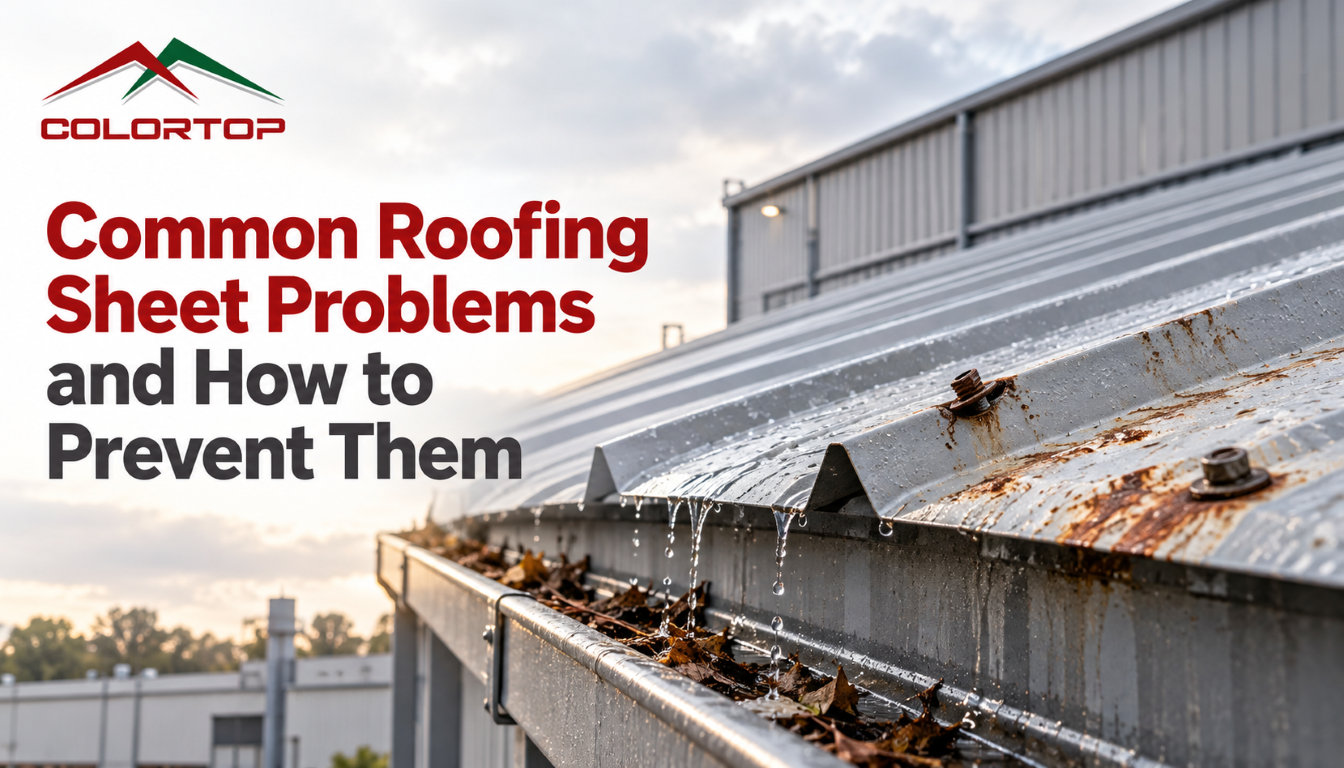
- Rinse the walls periodically to remove dust and pollutants. Our guide to maintaining roofing sheets in factories and warehouses covers cleaning and inspection routines that apply to wall sheets too.
Wall Cladding for Pre-Engineered Buildings
PEBs are designed so that the roof and wall sheets, purlins and girts all work as one system. If you are planning a new building, it helps to understand the whole package. Read more in our guide to pre-engineered buildings in India.
Frequently Asked Questions
What is the difference between wall sheets and roofing sheets?
They are often made from the same coil, but wall sheets are designed for vertical fixing and usually use shallower profiles. Roofing sheets are designed for roof drainage, weather exposure and wind uplift, with maintenance access controlled according to the roof system and manufacturer guidance.
Can I use roofing sheets on walls?
Often yes, if the profile suits it, but check the manufacturer’s recommendation. Fixing details and sealing differ between roof and wall.
Do wall cladding sheets need insulation?
Only if the building needs temperature control. Warehouses for general storage often run without it. Cold storage and many food-processing facilities typically require insulated wall systems to meet temperature-control requirements.
How long do metal wall sheets last?
It depends on the coating, the environment and maintenance. Properly specified and maintained sheets last many years. See our lifespan guide for the factors involved.
Can wall sheets be customised?
Yes. Colour, thickness and length can be specified to match the project.
Talk to Our Team
Planning a factory, warehouse or commercial building? Vishal Colour Roofs Limited manufactures wall sheets, roofing sheets, purlins and pre-engineered building components for industrial and commercial projects across India. Contact us with your drawings or requirements and our team will help you choose the right profile, thickness and coating.